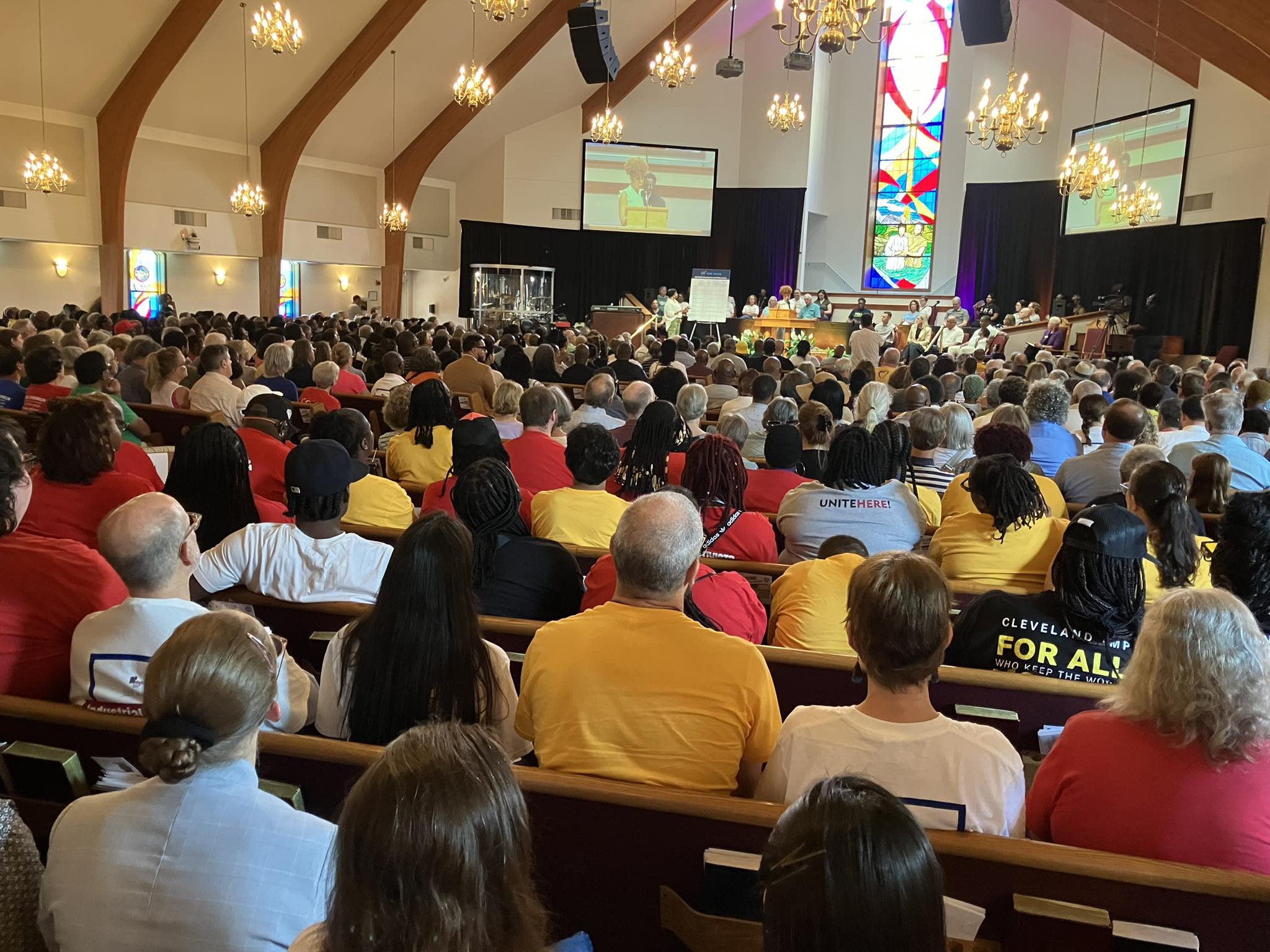
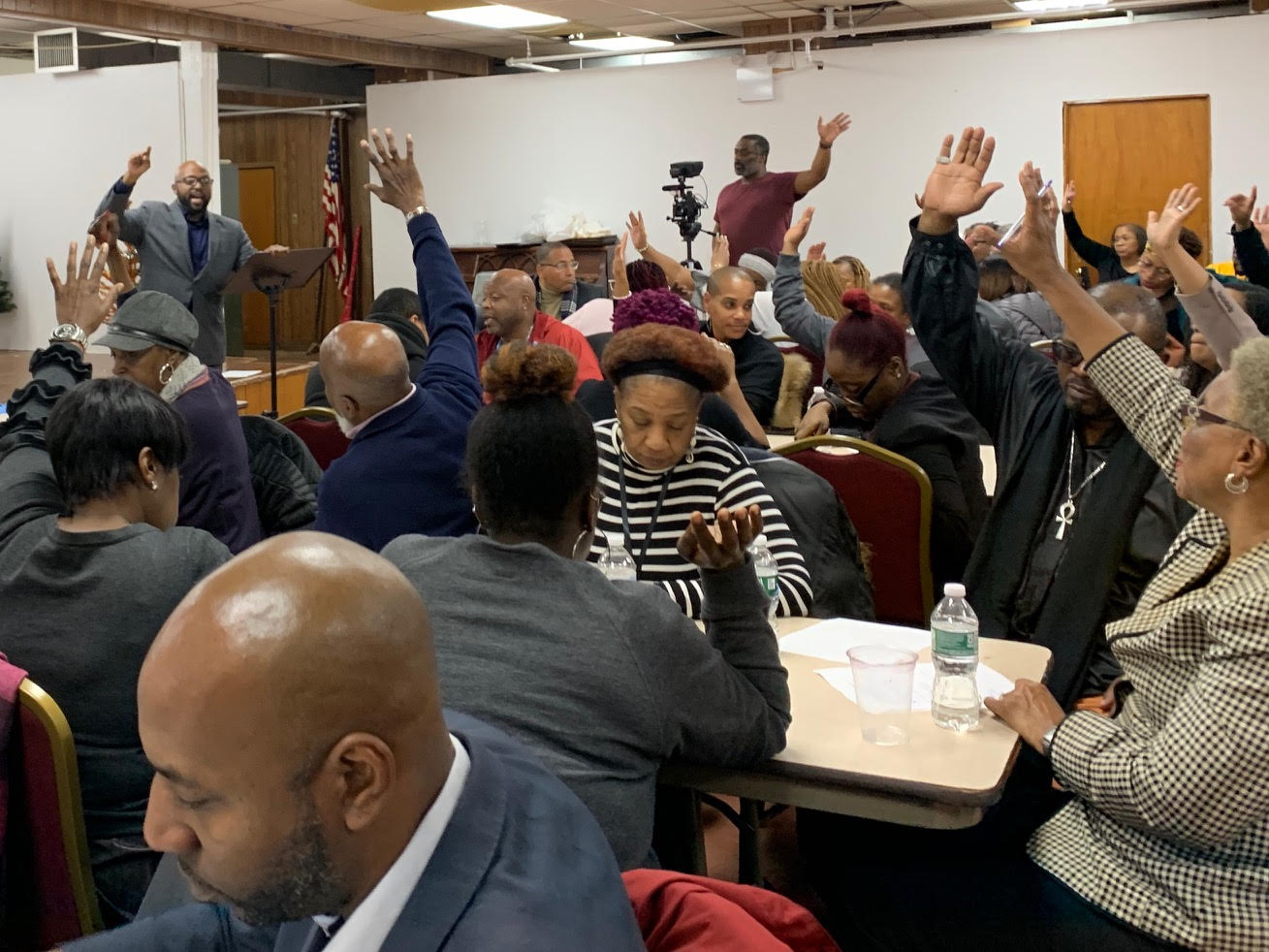
We believe that people working together have the power to change their communities and their country for the better.
Political and corporate leaders often don’t embrace change, unless they’re pressured by the people they serve. But too many people don’t realize they have potential to join forces and create change in their neighborhoods and across the country.
We work with the people who want to transform the world—from what it is to what they believe it should be. We challenge people to imagine the change they can accomplish, connect individuals and organizations to multiply their power, and mobilize people by the thousands to make their voices heard. We set audacious goals, create savvy strategies—and take on the powerful interests that stand in the way.
We are part of the Industrial Areas Foundation, the nation’s first and largest network of multi-faith community organizations—and we have seven decades of experience winning tough battles across the nation. Our 20 member organizations have a deep-roots presence in the political and financial power centers in the eastern United States and Europe. Our members pushed the politicians in Baltimore to pass the first living wage law in the country and mobilized a grassroots army for the creation of universal health care in Massachusetts—both of which have become national models for just social policy.
Drawing on the proven power of person-to-person organizing, our work transforms communities and builds the local power necessary to create national change.
Bill Moyers Essay: Newt's Obesession with Saul Alinsky from BillMoyers.com on Vimeo.
More information...Memo to the Obama Administration: if you want to see the makings of a national model to hold big banks accountable for fixing foreclosure-devastated neighborhoods, go to Milwaukee and talk to citizen leaders of a community organization who are practicing what Saul Alinsky preached.
More information...In 1996, the Industrial Areas Foundation, an organizing group that has built thousands of homes across New York City, proposed that private firms contracting with the city pay food service workers, security guards, cleaners and temporary office workers a wage that ranged at the time from $7.25 to $12 an hour. “We started with a pretty simple idea: If you work full time, you shouldn’t be poor,” recalled Jonathan Lange, an organizer with Metro I.A.F., the local affiliate.
More information...BY REV. DAVID K. BRAWLEY AND MICHAEL GECAN
While most attention is focused on a drawn-out debt crisis in Washington and spasmodic demonstrations in several cities, the most important economic and political battle of the period is being played out largely under the radar. This struggle pits the White House and a set of attorneys general who want a quick and limited settlement with the major banks over their conduct during the foreclosure crisis against another set of attorneys general, led by Eric Schneiderman of New York and Beau Biden of Delaware, who are pushing for more in-depth investigations and a much larger financial commitment to address the damage done to American homeowners.
More information...More than two years ago, on a brilliant July morning, we were two of about 350 New Yorkers who took to Wall Street to decry what we called "the recent economic collapse and current depression... devastating scores of millions of Americans." We were from every corner of the metropolitan area, African American, Hispanic and white. Our delegations visited each major Wall Street bank. At the same moment, organized citizens in Charlotte, Washington, Chicago, Boston and London were doing the same thing. It was a coordinated campaign led by the pastors, rabbis, imams and lay people in hundreds of religious and civic institutions associated with the Metro Industrial Areas Foundation.
More information...